
Literary Names
Nomenclature and Fiction

Their Real Names
When the Norwegian novelist Vigdis Hjorth was interviewed by The Guardian about her novel Will and Testament, a story of the aftermath of sexual abuse in a family suspiciously resembling her own, she insisted that she had written a conventional novel, not a memoir or work of autofiction. After all, she observed, her protagonist was named Bergljot, not Vigdis; if she were to write her family’s story, she would “write it as myself and—as Knausgaard does—a crucial thing—use their real names.”
In the conversation about autofiction that unfolded across Substack recently, Hjorth’s “crucial thing” never became a focus of discussion.1 The balance between experience and imagination was skillfully dissected. So were the industries and traditions that mediate this new, sort-of genre, and the national and linguistic differences that divide its various categories of practitioner.
Yet proper names seem to me, as Hjorth suggests, to be a crux of the genre—the feature that most ostentatiously embodies its contradictions. You can get away with a lot as a novelist so long as you alter the names. The events, incidents, and setting of a writer’s life can be transferred smoothly into a book without troubling its classification as a novel. You can even bring in portraits of real people, transforming your roman into a roman à clef. So long as the names are invented, a thin envelope of fictionality encloses the story, a vacuum seal between world and text that can only be traversed only through an interpretive act. Real names, however, reach outside the frame of the text, referring directly to the world and its inhabitants: in formal terms, it’s no longer fiction.
I’ve been fascinated by proper names for a long time: the Venn diagram of people interested in prosopography, the study of groups of people, and onomastics, the study of names, is surely just a smooth disc. So I thought I’d write briefly about the complex and still unfolding history of names in the novel, alongside the equally complex history of names in the world, which literary fiction by turns replicates and resists.2
Theory of the Novel, Theory of the Name
The single most influential theory of the novel’s origins began with the question of proper names. Like the Hjorth, the literary scholar Ian Watt argued that considering the use of names was the key to understanding the novel’s distinctive strategies of representation. Defoe, Fielding, and Richardson, he pointed out in the introductory chapter of The Rise of the Novel, all gave their characters realistic names. It was the utter banality of the characters’ names, their ostentatious ordinariness, that made it obvious that they stood in for ordinary people, the kind of men and women who might be the reader’s real contemporaries.
That meant, first of all, that characters had to have names, including both a given name and surname. No hero of the realistic novel could be simply Othello or Desdemona—or even Thomas or Mary. Like real surnames, fictional surnames could not be symbols, referring to universal truths rather than fictional people. To write a novel about Tom Jones, or Robinson Crusoe, was very different from writing about Everyman, like the anonymous fifteenth-century author of the Everyman play, or Pilgrim, like John Bunyan in Pilgrim’s Progress, even though Jones was plainly a kind of everyman, and Crusoe a kind of pilgrim. Spenser’s Duessa or Redcrosse were clearly out. But so, also, were the fanciful names of romance, which put the heroes and heroines on a different plane of representation, figures of myth and dream: Amadis and Oriana, or Celadon or Astrée.
Fictional surnames didn’t need to be absolutely meaningless. They could carry associations and ideas, as Richardson’s “Harlowe” and “Lovelace,” the heroine and villain of Clarissa, surely did, to say nothing of Fielding’s “Squire Allworthy.” But, Watt argued,
this appropriateness must not be such as to impair the primary function of the name, which is to symbolise the fact that the character is to be regarded as though he were a particular person and not a type.
Like real names, within the world of the text, they had to function primarily as tokens of reference rather than particles of meaning.
Not all novelists agreed. Books, after all, are not actually worlds; every name invented for the pages of a novel is an intellectual choice fraught with significance, even if the names themselves are lifted from the pages of the Paris directory (Zola’s practice).
Trollope, for instance, became notorious for his fanciful names. Naming a minor character Sir Damask Monogram was perhaps a venial offense. Minor characters, after all, were often “flat characters,” in E.M. Forster’s coinage—that is, types rather than individuals. But Trollope’s passion for allegorical names extended even to central protagonists such as the Duke and Duchess of Omnium, two of literature’s most subtly delineated characters, though you’d never know it from their titles. Henry James, whose writing on Trollope always had the sharp insight born from anxiety of influence, complained:
A Mr. Quiverful with fourteen children (which is the number attained in Barchester Towers) is too difficult to believe in. We can believe in the name and we can believe in the children; but we cannot manage the combination. It is probably not unfair to say that if Trollope derived half his inspiration from life, he derived the other half from Thackeray; his earlier novels, in especial, suggest an honourable emulation of the author of The Newcomes. Thackeray's names were perfect; they always had a meaning, and… we can imagine, even when they are most figurative, that they should have been borne by real people. But in this, as in other respects, Trollope's hand was heavier than his master's.
But really, what could you do with the sort of writer whose unquenchable enthusiasm for the absurd name led him to entitle a novel Is He Popenjoy?3
James tried to follow the example of Thackeray rather than Trollope in his own writing. His names typically have meaning, but they remain on this side of plausibility: Isabel Archer has the chaste associations of a Diana, but she isn’t actually called Isabel Artemis; Daisy Miller’s surname reflects her social origins, but she’s not called Daisy Commoner. Sometimes, though, James veers closer than he would care to admit to the Trollopian: Goodwood, one of Isabel’s suitors, is not so very far from Trollope’s American senator Gotobed. Like Dickens, James kept lists of names in his notebooks, copied from life and frequently adapted—a letter changed here, an etymology obscured there.
Needless to say, authors continued to give names that are at, or past, the limit of realism: Stephen Dedalus, for example. Right now I’m reading Alan Hollinghurst’s The Line of Beauty, the protagonist of which is called Nick Guest. With every introduction—and it's the kind of novel where people are constantly being introduced to one another—we’re reminded of the allegory.
As the examples of Quiverful, Dedalus, and Guest show, in the war between symbolism and realism, it’s the surname rather than the first name that’s really at issue. Real given names, after all, are frequently symbolic and associative. Families might name a child “Clarissa” in allusion to Richardson or Woolf or to the ideal of light and clarity. Girls are still named Faith by parents who presumably think it’s desirable quality, though these days boys are rarely named Praise God.
Surnames are different. Although they bear the markers of lineage and language, they place the individual within a system of reference rather than meaning. Yet this, in turn, is far from inevitable. The system of a given name and inherited surname is only one onomastic system among others. It’s historically, geographically, and linguistically specific. To understand the representational strategies of the novel and its ordinary names, we need to understand the history of the real system of naming it mimics.
What’s in a Surname?
In the early medieval period, no one in England had a surname. They reached English shores with only with the Normans, who brought the new practice with them. For the nobles who first adopted them, surnames derived from land, recording a claim to an estate. The practice of linking oneself to one’s land spread as nobles squabbled over property in an age when land tenures were never secure.
Gradually, surnames and titles began to adhere to people instead of estates, following genealogical descent. But the sense that proper names belonged to property died hard. A 1627 Act of Parliament resolved a legal tangle by declaring that the title of Earl of Arundel belonged to whomever was the owner of Arundel Castle, the family seat of the FitzAlans, then the Howards. Land, not blood, still conferred the name.
Surnames also had a later and humbler source. For ordinary people, they derived from the nicknames or “by names” used to distinguish one person from another. Every village must have had many Johns and Williams, two names that together were held by a third of medieval men in England, but it might have had only one John the tailor (John Taylor) or John William’s son (who might become John Williamson, Wilson, or Wilkinson, depending on whether his father was the kind of person to be called the respectful William, the friendly Will, or the belittling Wilkin). From the perspective of the next village, such names would have made little sense. They functioned only within the boundaries of small communities: only with local knowledge could you use such a name to pick out the correct person.
Both kinds of names were slowly reimagined as heritable surnames over the course of the middle ages; by the end of the fifteenth century, virtually everyone in England had a surname, though Wales was a different story. Their adoption was driven by widening circuits of trade and power: as England became a national state and economy, the identity of individuals had to be established across space and time.
In Seeing Like a State, James C. Scott argued that the adoption of surnames was part of the state’s attempt to render subjects “legible,” and he was surely right in part, although subjects also had plenty of reasons to make themselves and each other identifiable. Taxes had to be collected, but so did private loans. In the sixteenth and seventeenth centuries, we can see proper names circulating in parish registers and account books, in lists for military conscription and literary subscriptions (which Fielding mined for names), and much more besides.
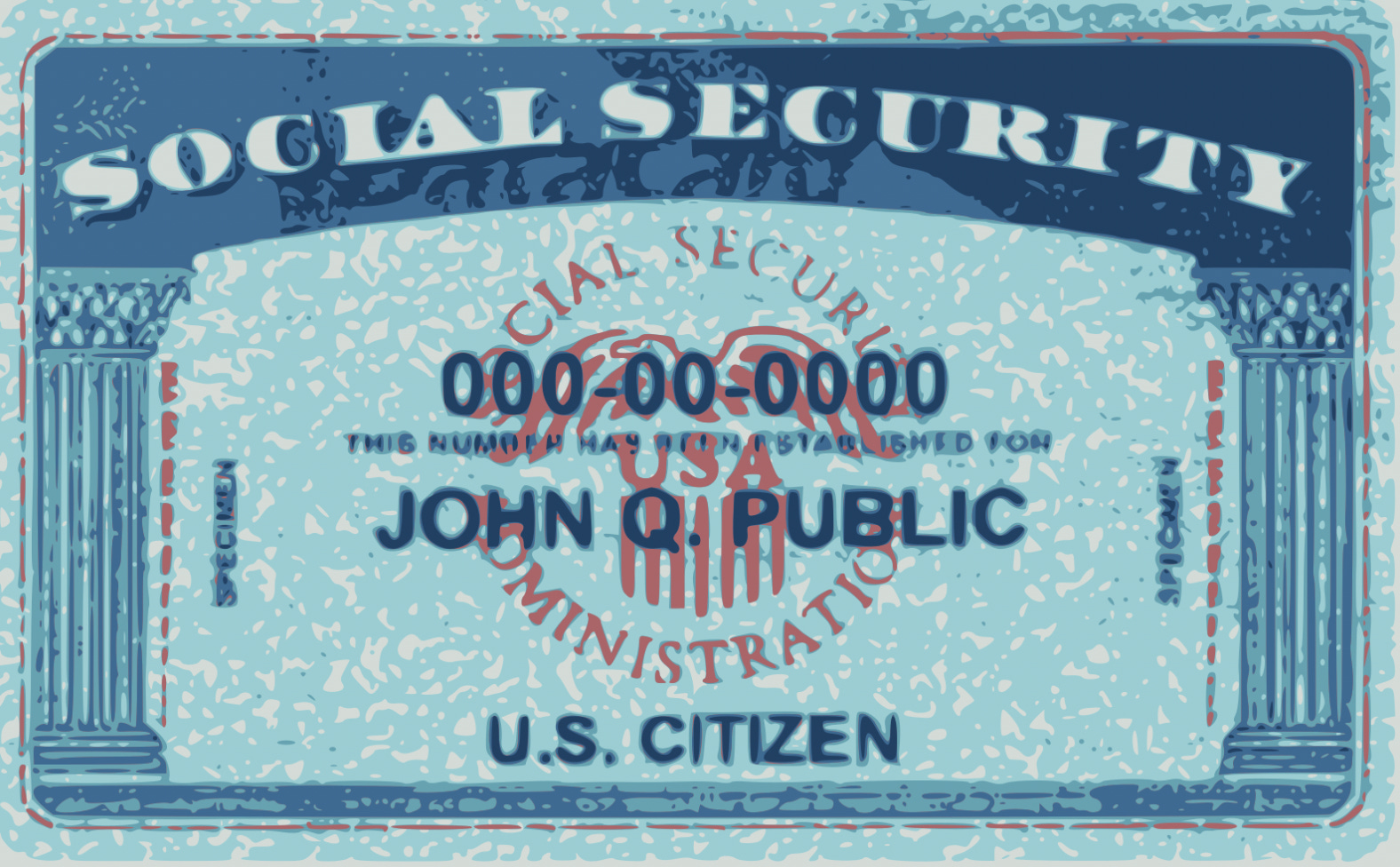
As surnames became widespread markers of reference, they were stripped of the meanings that had once been crucial to them. Their function was to identify individuals, not to describe them. It was a step in the direction of the social security number: a pure form of reference devoid of language’s inevitable patina of associations. John Stuart Mill summed up the transformation in his System of Logic, where he insisted that proper names have no meaning, but only reference. “When we use a proper name,” he writes, we are like the robber who makes “a mark with chalk upon a house to enable [him] to know it again,” a mark that has a purpose, but “has not properly any meaning.”4
Hence the modern idea that names are untranslatable, a set sequence of letters which has to be preserved in its original form, rather than a meaningful expression that can be carried across linguistic divides.5 But, again, that idea wasn’t inevitable: well into the seventeenth century, it was common to translate names into Latin, especially among Northern and Central Europeans.
The emergence of this system is obviously an essential context for Watt’s interpretation of the rise of the novel. It was no coincidence that the surname came to be understood as a token of reference rather than meaning in literature only once it had done so in life.
What Next?
We’re surely living through an interesting moment for proper names, small but essential clues to the relationship between truth and fiction.
Not that the past few hundred years have been static: celebrity culture and the mass media circulate names in ever greater numbers. Brand names and trade marks have made things into proper names, rendering the material world describable in terms that favor reference over meaning. Here, as elsewhere, there’s a connection to the novel: the heavy use of brand names was one of the characteristics Jodie Archer and Matthew Jockers identified as predictive of book sales in The Bestseller Code. I suspect that a far greater proportion of ordinary people’s mental lexicon consists of proper names today than at any point in the past.
But the scale of those shifts is tiny in comparison to the seismic force of the internet, where we now live in a shadow world inhabited by so many names. As Justin Smith-Ruiu remarked recently, “I’m rubbing virtual shoulders with people with names like Gnocchic Apocryphon.”
What literary form could mirror this brave new onomastic world?
I’m thinking, of course, of comments by Derek Neal , Milena Billik, Jeffrey Lawrence, John Pistelli and many others.
Surely one of the great titles. But then, it’s hard to compete with Trollope for titles—or names. Henry James is the greater novelist, but he’s not the greater namer.
Mill’s interpretation was influential but controversial; in the twentieth century, most philosophers rejected it, though Kripke’s very original interpretation of the problem revived some of its elements.
We’re so used to this idea that translators of literature today err on the side of not translating character names, even when their meaning has an allegorical dimension.
This is fascinating, particularly the conclusion. Your opening remarks on autofiction plus your note about the novels you’ve read recently intersect so directly with my forthcoming too-long essay on Alice Munro (autofiction in which (i) the mother, not the patriarch, is the center of interest, and (ii) the subject matter is incest) that I should really write a post…
Now down to the serious business of quibbling about funny names. I feel like the name Omnium was a trap Trollope fell into because of unanticipated sequels. It was a perfect name for the old Duke, because the old Duke’s place in society is drawn a bit more broadly than Plantagenet’s is. Plantagenet Palliser is also a wonderful name but it is ever so slightly less silly.
You’re probably right that Trollope is a better namer than James, but when he lets himself go James gets away with effrontery in the naming department that Trollope wouldn’t dare. Trollope would never name a character Fanny Assingham.
This is really great and brought up so many thoughts and connections for me. The main one is abut Knausgaard's use of naming. Although he does use real names, as Hjorth points out, he doesn't use the name of his father, only referring to him as "dad" or "father." This, of course, creates a huge symbolic effect, especially when Knausgaard writes about being a father himself and when he becomes angry in the same way that his father did. His one goal as a father, he says, is to make sure his children aren't scared of him the way he was of his father.
But in Book 6 this all changes, and we learn the father's name, just like that, without having realized that the name has been withheld the whole time. In an interview about this Knausgaard said:
"Someone was talking to me about the book, and she said that when my father’s name first appears, it’s almost shocking. His presence is different when he has a name—it’s a connection to the real world. And literature always has a gap, a veil between it and the real world. It has to be like that, and it should be like that . . . and then I took real people and put them behind that veil, into this closed world. Seeing their names, it’s like a glimpse of their real existence."